EV Charger Installation Cost in London (2026 Prices)
A home EV charger in London costs around £900 to buy and install in 2026, with most jobs between £500 and £1,200. This guide tiers the price by cost driver, explains the Gov.uk grants of up to £500 for flats, renters and on-street parking, covers the Part P and safety rules, and shows what a fair quote includes.
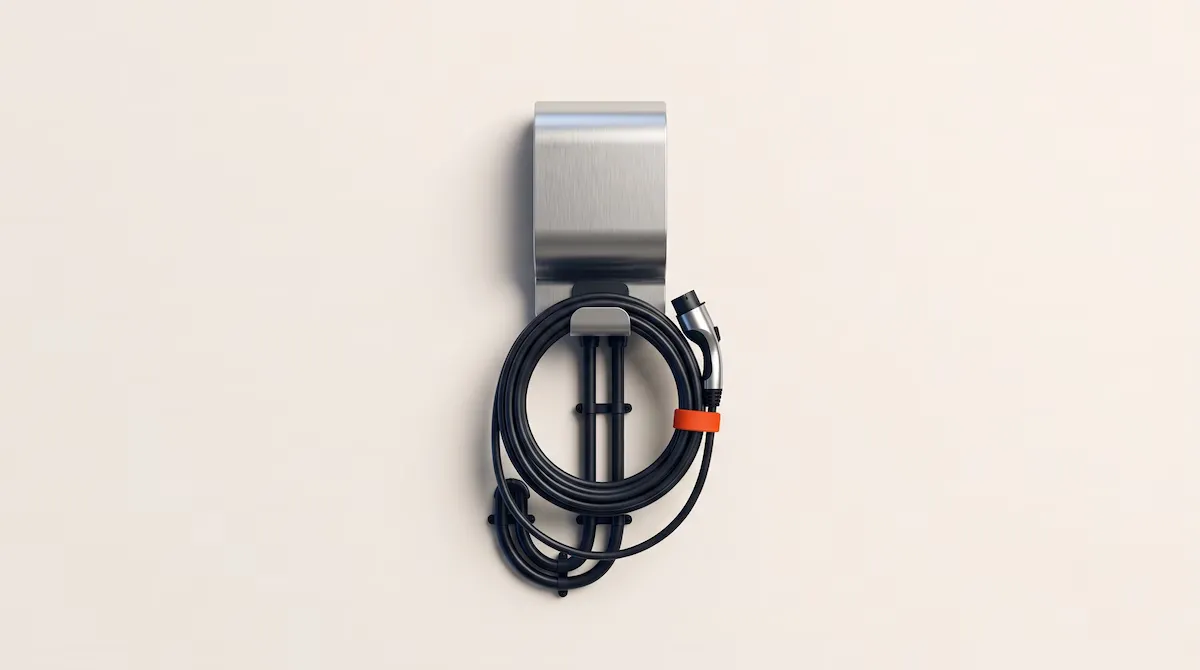
Last updated: July 2026. Written by the loacally editorial team, using cost data from Which? and grant, safety and consumer guidance from Gov.uk and Citizens Advice. Prices vary by property and installer, so always get written quotes.
TL;DR A home EV charger in London typically costs around £900 to buy and install in 2026, with most jobs landing between £500 and £1,200 depending on the charger and how much wiring work is needed. If you live in a flat, rent, or park on-street, a Gov.uk grant can cut 75% off the cost, up to £500.
Fitting a home charger is one of the more predictable electrical jobs, but the final price depends heavily on your property. A charger on a driveway with a nearby consumer unit is quick and cheap. A charger for a first-floor flat, a long cable run across a garden, or an older board that needs upgrading first all push the cost up. This guide sets out what a home EV charger costs in London in 2026, the grants that still exist, and how to make sure your quote is a fair one.
How much does EV charger installation cost in London?
A home EV charger costs around £900 to buy and install in 2026, with most installations falling between £500 and £1,200 [1]. That figure covers a standard 7kW smart charger and a straightforward fit. Which? reports this range for a typical home charge point, and notes that a 7kW unit is the sensible choice for most households because domestic supplies cannot make use of the faster 22kW chargers [1].
London does not have a single fixed price, because the cost is driven by the work at your specific property rather than the charger itself. The unit is the smaller part of the bill. The labour, the cable route, and any upgrade to your fuse box are what move a quote within (and sometimes above) that £500 to £1,200 band. Treat the numbers below as a planning guide, then get written quotes for a firm figure.
What a fair EV charger quote should include
The single most useful thing you can do before hiring is know what a proper quote itemises. A fair EV charger quote in London should set out each of the following, rather than bundling everything into one number:
- Site survey - a visit or detailed remote assessment before any price is fixed.
- The charger itself - make, model, power rating (usually 7kW), and whether it is tethered (fixed cable) or untethered (socket only).
- Smart-charging compliance - confirmation the unit meets the smart charge point regulations [4].
- Labour and the cable run - the route from your board to the charger, priced clearly, especially if it is a long or awkward run.
- Consumer unit and earthing work - listed separately if your fuse box or earthing needs upgrading, never hidden inside the headline price.
- Open-PEN fault protection - the safety device or dedicated earth the wiring regulations require for an EV charger.
- Making good - filling, sealing and tidying the route after the cable is run.
- Testing and certification - a full electrical test, an Electrical Installation Certificate, and notification of the work under Part P [7].
- VAT - stated clearly, and any grant deduction shown as a separate line [2].
If a quote does not break these out, ask for a revised one that does. Citizens Advice recommends getting written quotes from at least three different traders so you can compare like for like [5].
What affects the price of a home charger
The charger unit varies little in price, so the differences between quotes almost always come from the installation. The main cost drivers in a London home are:
The cable run. A charger mounted on an external wall a metre from your consumer unit is cheap. A run that crosses a garden, goes up to a first-floor flat, or is chased into a wall costs more in both labour and materials.
Your consumer unit and earthing. A modern EV charger needs the right protection and a sound earth. If your fuse box is old or your earthing arrangement is not suitable, that work is a separate job that comes first. Our guide to fuse box upgrade costs in London covers what that involves, and a full house rewire is occasionally the trigger in very old properties.
Tethered or untethered. A tethered charger has the cable permanently attached, which is convenient. An untethered unit is a socket you plug your own cable into, which is tidier and future-proofs you against changing connectors. The price difference between the two is modest compared with the installation work.
Access and parking. Off-street parking with a wall to mount on is the simple case. Flats, shared parking, and on-street parking are harder, and are exactly where London differs from most of the UK.
Grants: how to cut the cost by up to £500
The home charger grant no longer covers everyone. In 2026 the Gov.uk EV chargepoint grant is aimed at the people who find it hardest to charge, and covers 75% of the cost to buy and install a socket, up to a maximum of £500 [2]. That £500 cap rose from £350 on 1 April 2026 [2]. The grant runs until 31 March 2027 [2].
Crucially, the grant is not for owners of a standard house with a private driveway. It is targeted at three groups [2]:
- People who live in flats with their own off-street parking space.
- People who rent their home and have off-street parking.
- Households with on-street parking who are installing a cross-pavement channel to run a cable safely from the property to the kerb, with their council's permission.
There is a matching grant for residential landlords, who can claim the same 75% up to £500 per socket, for up to 200 sockets a year, provided they do not live in the property [3].
To claim any of these, two conditions matter. You must own or lease an eligible electric vehicle, and the work must be carried out by an installer authorised by the Office for Zero Emission Vehicles (OZEV) [2]. OZEV authorisation is separate from an electrician being registered to certify their own work, so confirm both before you commit.
The government has framed the change as widening access. As the Minister put it when the higher cap was announced:
"We're taking action to make EV ownership the affordable choice for everyone, not just those with driveways."
That was Keir Mather, then a transport minister, in a Gov.uk announcement on 25 February 2026 [6].
For on-street residents, some London boroughs also run cross-pavement cable channel schemes and, separately, install public chargers through the government's on-street residential chargepoint funding. Provision differs from borough to borough, so check your own council's website for what is available on your street.
Regulation and safety: what a compliant install looks like
Installing an EV charger is notifiable electrical work. It creates a new circuit, which falls under Part P of the Building Regulations, so it must either be notified to building control or, far more commonly, carried out by an electrician registered with a competent person scheme who can self-certify the work [7]. Schemes such as NICEIC and NAPIT (the National Association of Professional Inspectors and Testers) exist for exactly this purpose.
Do not treat a home charger as a plug-in job for a general handyman. A proper install includes protection against an open-PEN fault, which is a rare but dangerous broken-neutral condition on the incoming supply. The current wiring regulations, BS 7671, require either a device that detects this fault and disconnects, or a dedicated earth rod, on every EV charge point. This is one of the main reasons the job needs a qualified electrician rather than a socket on an existing ring.
Your charger must also be a smart charge point by law. The Electric Vehicles (Smart Charge Points) Regulations 2021 have applied to new home and workplace chargers since 30 June 2022, and require smart functionality, an off-peak charging default, a randomised start delay, and basic cybersecurity [4]. Any reputable installer will only fit compliant units, but it is worth confirming.
For shared and communal parking, accessibility is covered by the British Standards specification PAS 1899, published in 2022, which sets out how public and shared charge points should be positioned and sized so they are usable by disabled drivers. It is most relevant to flats and shared car parks rather than a single private space.
Charging in London: flats, no driveway, and on-street parking
London's housing makes home charging harder than the national average, which is precisely why the 2026 grant changes matter here. A large share of London homes are flats or converted properties without a private driveway, so the classic image of a charger on a garage wall does not apply to most residents.
If you live in a flat with an allocated off-street bay, you may qualify for the £500 grant that a driveway house owner would not [2]. If you park on the street, a cross-pavement channel lets a cable run safely across the footway without becoming a trip hazard, and can also attract the grant where your council permits the channel [2]. If neither is possible, a nearby public or on-street charger installed through borough schemes may be the more realistic option.
The practical takeaway for Londoners is to establish your parking situation first, because it determines both your installation cost and whether you can claim a grant. A quick conversation with an installer who knows your borough will save time.
How to hire a trustworthy EV charger installer
Hiring well is mostly about verification. Before you accept a quote, confirm the installer is registered with a competent person scheme so they can legally certify the work under Part P [7], and, if you are claiming a grant, confirm separately that they are OZEV-authorised [2]. Ask for the scheme registration number and check it.
Then compare on a like-for-like basis. Get at least three written quotes, all itemised using the checklist above, so you are comparing the same scope rather than three different jobs [5]. Be wary of any quote that is a single round number with no survey, and of anyone who cannot show current registration. For the wider principles of choosing a tradesperson in the capital, see our guide on how to find a trusted tradesperson in London. If your install turns out to need board work first, our EICR and electrical safety certificate guide explains how the condition of your wiring is assessed.
When you are ready, you can find a trusted local electrician through Loacally, where every member is reviewed by hand before their profile goes live.
Frequently asked questions
How much does it cost to install a home EV charger in London?
A home EV charger costs around £900 to buy and install in 2026, with most jobs between £500 and £1,200 [1]. The charger unit is the smaller part; labour, the cable run, and any consumer unit or earthing upgrade drive the difference. Get three written quotes for a firm price, as costs vary by property.
Can I still get a grant for a home EV charger in 2026?
Yes, but not for a standard house with a driveway. The Gov.uk grant covers 75% up to £500 per socket for people who live in flats, rent their home, or install a cross-pavement channel for on-street parking [2]. You need an eligible electric vehicle and an OZEV-authorised installer. It runs until 31 March 2027.
Do I need a special electrician to install an EV charger?
Yes. An EV charger is a new circuit and notifiable under Part P of the Building Regulations, so it must be installed by an electrician registered with a competent person scheme such as NICEIC or NAPIT, who then certifies the work [7]. To claim a grant, they must also be separately authorised by OZEV [2].
Should I choose a tethered or untethered charger?
A tethered charger has a fixed cable, which is convenient day to day. An untethered unit is a socket you plug your own cable into, which is tidier and adapts to different vehicles or future connectors. The price difference is small next to the installation work, so choose on convenience rather than cost.
Why is EV charger installation more expensive for London flats?
Flats and converted properties often lack a nearby off-street wall, so the cable run is longer and the install more complex, which raises labour costs. The upside is that flat residents and renters with off-street parking can claim the £500 grant that driveway house owners cannot, which offsets much of the difference [2].
How long does it take to install a home EV charger?
A straightforward home EV charger install usually takes around half a day. A longer cable run, a first-floor flat, or a consumer unit upgrade beforehand can extend it to a full day or require a return visit. Your installer should confirm the expected time in the written quote after a survey.
Sources
- Electric car charging at home -- Which?, published 25 February 2026, accessed 2026-07-23
- Electric vehicle chargepoint grant for households with off-street parking -- Gov.uk, accessed 2026-07-23
- Electric vehicle chargepoint and infrastructure grant guidance for installers -- Gov.uk, accessed 2026-07-23
- Electric Vehicles (Smart Charge Points) Regulations 2021 -- Gov.uk / legislation.gov.uk, accessed 2026-07-23
- Before you get building work done -- Citizens Advice, accessed 2026-07-23
- Grant boost to cover almost half the cost of installing EV chargers -- Gov.uk, published 25 February 2026, accessed 2026-07-23
- Approved Document P: Electrical safety - dwellings -- Gov.uk (Building Regulations), accessed 2026-07-23
Need an electrician in London?
See who’s nearby, compare clear prices, and book a visit in minutes.
Keep reading
Signs You Need to Rewire Your House: A London Homeowner's Guide (2026)
How to tell if your London home needs rewiring in 2026: the urgent warning signs, the signs to get checked, what an EICR tells you, and why a registered electrician must do the work.

EICR Explained: What an Electrical Safety Certificate Costs in London and When You Need One (2026)
A clear 2026 guide to the EICR, the electrical safety certificate. What it covers, who legally needs one in London, what it costs, what the C1 to C3 codes mean and how to find a registered electrician.
Fuse Box Upgrade Cost in London: What to Expect
What a fuse box (consumer unit) upgrade costs in London in 2026, what Part P and the 18th Edition require, the certificates you should receive, and how to choose a registered electrician.