How Much Does a Walk-In Shower Cost? 2026 UK and London Prices, Including Replacing a Bath
What a walk-in shower costs in 2026, by job: a low tray in place of a bath, a tiled level-access floor or a full wet room. UK prices first, then London, with a fair quote checklist, a worked sum, VAT relief, Disabled Facilities Grants and Part P.
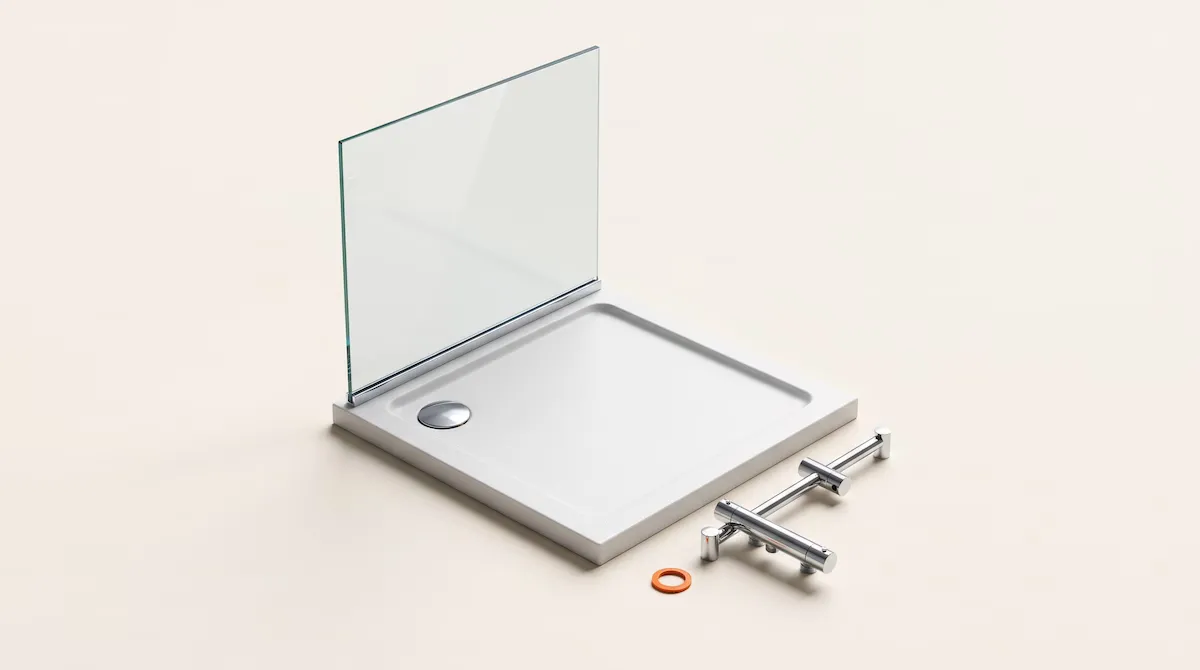
Last updated: November 2026. Prices checked on 5 November 2026. Cost figures come from dated UK market guides, because no official body publishes walk-in shower prices. VAT, grant and building regulation points are checked against Gov.uk, legislation.gov.uk and the NHS. This guide is general information, not medical, tax or legal advice.
TL;DR: Replacing a bath with a walk-in shower on a low tray typically costs about £1,500 to £3,500 in the UK in 2026 on market guides [1][2]. A tiled level-access floor runs about £3,500 to £7,000 or more, and a full wet room about £4,000 to £12,000 [2][3][4]. London usually sits at the upper end [5].
A "walk-in shower" can mean a low tray and a glass screen fitted where the bath was, or a room rebuilt around a waterproofed, tiled floor with a drain in it. That is why published prices run from about £1,000 to £18,000 or more [6][7]. This guide gives the UK price for each job first, then what changes in London, then each line on its own: the floor, the waste, the tanking and the electrics.
It also sets out what Gov.uk says about VAT relief and Disabled Facilities Grants, for anyone adapting a bathroom because of a disability. If you only want to change the shower itself, our guide to the cost of installing a shower covers electric, mixer and power shower swaps.
How much does a walk-in shower cost?
A walk-in shower on a low tray, fitted where a bath was, costs about £1,500 to £3,500 on most 2026 UK guides [1][2]. MyJobQuote, which bases its guide on quotes given on its own platform, puts the average bath replacement at £2,800 [6]. Labour on a standard job is typically about £600 to £1,200 of the total [1][2].
Three terms explain most of the price differences:
- Low-level tray: a shallow tray with a small step, about 40 to 50 mm above the floor [1].
- Level access: no step at all, because the waste sits below the finished floor with enough fall to drain [2].
- Wet room: no tray, because the floor itself slopes to a drain and is waterproofed before tiling [4].
| What you are buying | Typical 2026 price | Source |
|---|---|---|
| Existing cubicle changed to a walk-in, no bath to remove | £1,000 to £2,500 | Less, 30 October 2026 [1] |
| Bath out, low tray and glass screen in the same space | £1,500 to £3,000 | Less, 30 October 2026 [1] |
| Standard walk-in: low tray, screen, tiled walls | £1,500 to £3,500 | Trade2Base, 14 June 2026 [2] |
| Bath replaced with a walk-in, across all designs | £1,000 to £5,000, average £2,800 | MyJobQuote, 12 October 2026 [6] |
| Bath out, with layout changes | £2,500 to £4,000 | Less, 30 October 2026 [1] |
| Premium tray job: frameless screen, large-format tiles, digital valve | £3,000 to £5,000 | Trade2Base, 14 June 2026 [2] |
| Tiled level-access floor with no tray: former, tanking, floor tiling | £3,500 to £7,000 or more | Trade2Base, 14 June 2026 [2] |
| Wet room, conversion of an existing bathroom | £4,000 to £7,000, average £5,500 | MyJobQuote, 22 September 2026 [3] |
| Wet room, small, typical and large rooms | £5,500 to £8,500, £7,500 to £12,000, £10,000 to £16,000 | Job Prices, 15 October 2026 [4] |
| Wet room, budget, mid-range and luxury finish | £3,500 to £6,000, £6,000 to £10,000, £10,000 to £18,000 or more | Trade2Base, 8 June 2026 [7] |
| Accessible conversion: level access, slip-resistant floor, rails, often a seat | £6,000 to £10,000 or more | Trade2Base, 14 June 2026 [8] |
| One specialist installer's ranges: low tray, level access, wet room | £6,000 to £7,500 or more, £7,500 to £10,500 or more, £8,000 to £14,000 or more | EA Mobility, 28 October 2026 [9] |
These are market figures, not survey results. The Which? plumber survey has no row for this job [5], and the Federation of Master Builders (FMB) bathroom guide prices an enclosure, not a walk-in conversion [10]. A March 2025 Homebuilding & Renovating article gives a similar spread, quoting Thomas Oldham of UK Construction Blog at about £1,500 for a simple set-up to £7,500 for something high-end [11]. Several sources here sell this work or sell leads for it, and the source list says which. Use the ranges to read a quote, not to replace one.
The VAT basis differs too. Job Prices includes VAT where it is charged [4], EA Mobility describes its prices as before VAT relief [9], and the other price guides do not say.
A specialist's £6,000 is not a general guide's £1,500. EA Mobility, which sells accessible bathrooms, says its range includes safety features [9]. Trade2Base's lower figures also itemise bath removal and tiling [2], so on our reading the gap is mostly specification: level access, slip-resistant flooring, rails and seating.
If the whole room is being refitted at the same time, our bathroom renovation cost guide prices the full job, including premium London fit-outs that sit well above the conversion prices in this table.
What changes in London
Labour is the main difference in London. MyJobQuote puts a bathroom fitter or wet room installer at £250 to £350 a day in London, against £180 to £250 across the UK [3]. Which? says its plumbing prices are likely to be at the upper end of the scale in London or the South East [5], and the FMB says London bathroom prices are among the highest in the country [10].
No single London percentage is safe to rely on. Less, a quotes site, puts London about 17 per cent above the UK average for bathroom fitting [1]. Job Prices multiplies its UK wet room figure by 1.25 for inner London and 1.15 for outer London, using Building Cost Information Service (BCIS) location factors [4]. Trade2Base says London and the South East typically add 25 to 40 per cent to wet rooms [7]. As an illustration only, 15 to 40 per cent on a £1,500 to £3,500 tray job gives about £1,725 to £4,900. No source here publishes a dated price for London alone.
A London home with no drive can add costs that a national guide rarely lists. You or the skip firm need a council licence to put a skip on a public road, and a skip cannot go on the pavement [12]. Lambeth publishes its 2026/27 charges, so it serves as an example, but fees differ by borough.
| Lambeth charge, 2026/27 | Fee | What to know |
|---|---|---|
| Skip licence, on the road or in a suspended bay [13] | £80 | Not needed if the skip stays entirely on private land [12] |
| Parking suspension, per space, per day [14] | £57.55 | A half day is £34.57 |
| Parking suspension admin fee [14] | £98.83 | Not refundable. Any break in the dates counts as a new suspension |
Trade2Base also lists upstairs bathrooms, narrow stairs, no parking for skips or vans and restricted working hours among the things that legitimately raise a quote [2].
What a fair walk-in shower quote should include
A fair walk-in shower quote is itemised, so you can compare traders like for like. Check that it sets out:
- A fixed total, not an estimate. Citizens Advice says a quote is a fixed price, while an estimate is just a rough guess [15].
- Which job it is. Tray and screen, tiled level-access floor or wet room. Trade2Base calls this the question that explains most of the price [2].
- The floor and the waste. What the floor is made of, any strengthening or breaking out, where the waste runs, and whether it needs a pump.
- The waterproofing. Which tanking system, which areas it covers, and whether it is tested before tiling [2].
- The fittings. The shower and valve by make and model, the screen thickness, the tiled area in square metres, and who supplies each.
- Electrics and ventilation. Who does the work, which certificate you will receive, and whether a fan is kept, replaced or added.
- Strip-out and waste. Removing the bath, making good behind it, the skip and any licence.
- VAT, validity and days on site. Whether VAT is included, how long the price holds, and whether the days allow for curing [2].
Get written quotes from at least three traders, because comparing them helps you judge a fair price [15]. TrustMark, the Government-Endorsed Quality scheme, also advises checking qualifications, references, insurance and guarantees [16]. Our guide to how much deposit to pay a tradesperson covers what to pay up front.
Why do walk-in shower quotes vary so much?
Walk-in shower quotes vary because five things can change underneath the same finished look: the tray, the floor, the waste, the tanking and the electrics. Trade2Base says two showers that look almost identical in a brochure can be £2,000 apart once fitted [2].
Tray or wet room
A tray is a single bought-in part that seals to the floor, while a wet room relies on a sloping board called a former and waterproofing across the wet area [2]. Trade2Base says removing the tray adds roughly £1,500 to £3,000 over the equivalent tray job [2], and EA Mobility puts a wet room at £2,000 to £3,500 or more above a tray-based shower at the same finish [9].
Job Prices' editor suggests a wet room where a level, open floor really matters, and a walk-in where the aim is simply to lose the step into the bath [4]. For anyone with mobility needs, that is a question for a home assessment, not a price guide.
Level access and the floor
Level access costs more because the waste has to sit below the finished floor. On a suspended timber floor that usually means cutting joists and building up the floor, and on solid concrete it can mean a pumped waste or raising the whole floor [2]. Job Prices estimates £600 to £1,800 extra on timber and £900 to £2,500 for breaking out concrete [4]. A timber floor with any bounce needs strengthening first, according to Homebuilding & Renovating [17], so ask the fitter to check the floor in person before quoting.
Moving the waste
Keeping the shower where the bath was is the simplest way to hold the price down, because the existing waste and water supply can often be reused [1]. EA Mobility says a standard 1,700 mm bath alcove takes a 1,700 by 700 mm tray without moving the waste [9]. Moving it adds about £200 to £500 on Less's figures and £200 to £600 or more on Trade2Base's [1][2]. If the waste cannot run downhill to the soil stack, EA Mobility says a pump adds from a few hundred pounds to over a thousand [9].
Tanking
Tanking means waterproofing the floor and walls before the tiles go on. The Tile Association says water-resistant adhesive and grout are "no substitute for a waterproof tanking system", citing BS 5385 Part 4 [18]. Query any quote with no tanking line: Trade2Base warns that a low headline price sometimes hides corners cut on this stage [2]. It puts tanking a shower area at £150 to £400 [19], and MyJobQuote gives £300 to £800 for full-room tanking [3].
Electrics
An electric shower needs its own dedicated electrical supply, and higher-rated models may need upgrades to the wiring and protective device, according to NICEIC [20]. Trade2Base puts a new electric shower on a new circuit at £350 to £650, with a plumber and an electrician [19]. A mixer shower avoids that circuit, but on a gravity-fed system it often needs a pump at £200 to £500 plus fitting [8].
Every other line, priced on its own
| Line | Typical cost | Source |
|---|---|---|
| Removing the bath | £150 to £300 | MyJobQuote, 12 October 2026 [6] |
| Repairing the wall and floor where the bath stood | £150 to £600 | MyJobQuote, 12 October 2026 [6] |
| Low-profile tray, supply only | £100 to £350 | Less, 30 October 2026 [1] |
| Glass screen: framed, semi-frameless, frameless | £150 to £300, £250 to £500, £400 to £800 | Less, 30 October 2026 [1] |
| Valve, supply only: thermostatic, digital | £200 to £500, £300 to £800 | Less, 30 October 2026 [1] |
| Porcelain tiling, supply and fit, per m² | £40 to £70 | Trade2Base, 14 June 2026 [2] |
| Lighting, extractor fan or other electrical alterations | £150 to £500 | MyJobQuote, 22 September 2026 [3] |
| Skip | £150 to £300 | Trade2Base, 14 June 2026 [8] |
| Underfloor heating in the shower area | £300 to £600 | Less, 30 October 2026 [1] |
For more on square-metre rates and tile choices, see our guide to the cost of tiling a bathroom.
Replacing a bath with a walk-in shower: what it costs
Replacing a bath with a walk-in shower costs about £1,500 to £2,500 for a basic swap and £2,500 to £4,000 for a better tray, screen and tiling, according to Trade2Base [8]. It splits the job into four bands, with the labour days each one takes.
| Conversion | Typical price | Labour |
|---|---|---|
| Basic: tray and enclosure swap | £1,500 to £2,500 | 2 to 3 days |
| Mid-range: better tray, screen and tiling | £2,500 to £4,000 | 3 to 4 days |
| Tiled walk-in or wet room conversion | £4,000 to £7,000 or more | 4 to 6 days |
| Level-access or disabled adaptation | £6,000 to £10,000 or more | 5 to 7 days |
Removing a bath exposes wall and floor that were never meant to be seen. Trade2Base says that usually means unsealed plaster, an unfinished floor and a tiling shortfall, and that rotten boarding and poor pipework are common once the bath is out [8]. Ask how the quote treats anything found behind the bath.
Removing the only bath can matter when you sell. Which? says the general consensus among experts is that it is ill-advised to replace a bathtub with a walk-in shower if it is the only bath in the house, because it can be off-putting to buyers with young families [21]. That is a resale point only. If someone at home can no longer get in and out of a bath, their need comes first.
A worked sum: a bath replaced by a low tray in London
This is an illustration built from the rates cited in this guide. It is not a quote and not a real job. It assumes a mid-range tray and screen where the bath was, on a sound timber floor with hot and cold supplies nearby, with Trade2Base's worked-example lines [2] and three days of fitter labour at MyJobQuote's London rate [3].
| Line | Working | Low | High |
|---|---|---|---|
| Strip out the bath, cap the taps, make good | Trade2Base line | £250 | £400 |
| Low-level 1,200 by 800 mm tray and 8 mm fixed screen, supply | Trade2Base line | £350 | £600 |
| Thermostatic mixer, riser and head, supply | Trade2Base line | £200 | £450 |
| Tiling three walls, about 8 m², supply and fit | Trade2Base line | £500 | £900 |
| Fitter labour | 3 days × £250 to £350 | £750 | £1,050 |
| Sundries, silicone, disposal | Trade2Base line | £100 | £200 |
| Total, VAT basis not stated by the sources | £2,150 | £3,600 |
That is roughly £2,150 to £3,600. Trade2Base's own example, at its national labour figure, comes to around £2,100 to £3,500 [2]. Four things can move it:
- VAT. If the fitter is VAT-registered and adds 20 per cent to the whole total, that adds £430 to £720. If the work qualifies for zero rating, it adds nothing.
- A tiled level-access floor instead of the tray. Adding Trade2Base's £1,500 to £3,000 gives about £3,650 to £6,600 before any VAT [2].
- A skip on the road. Add £150 to £300 for the skip [8], plus £80 for a Lambeth licence [13], and £156.38 if a parking bay has to be suspended for a day [14].
- A new electric shower circuit. Add about £350 to £650 [19].
Do you pay VAT on a walk-in shower?
Most walk-in shower work is charged at the standard 20 per cent VAT rate, because Gov.uk says most work on houses and flats by builders and similar trades is standard rated [22]. VAT only applies if the trader is VAT-registered, which is compulsory once taxable turnover goes over £90,000 [23].
A disabled person may not have to pay VAT on this work. HMRC's guidance, published on 6 January 2015, gives the example of "having a bath removed and replaced with a shower or walk-in bath if, because of your disability, you have difficulty getting in and out of a traditional bath" [24]. VAT Notice 701/7, last updated on 31 December 2020, says a bathroom "includes a shower or 'wet' room", and that the work must be necessary to suit the condition of a disabled person [25]. Gov.uk's VAT rates table, updated on 10 July 2026, still lists the installation of a bathroom for disabled people in their own home at 0 per cent [26].
General home improvement does not qualify. HMRC says the relief "does not include having a new bathroom installed or existing bathroom re-fitted, repaired or redecorated as a general home improvement" [24]. On that wording, a walk-in shower chosen for the look or to free up space does not qualify.
- Who counts. A person with a physical or mental impairment that has a long-term and substantial adverse effect on everyday activities, a condition the medical profession treats as a chronic sickness, such as diabetes [25], or a terminal illness [27].
- Who does not. An elderly person who is not disabled or chronically sick, or anyone only temporarily disabled, for example with a broken limb [25].
- No means test. The relief does not depend on benefits, and you do not have to be registered disabled [25].
- HMRC will not decide for you. Its advisers cannot say whether you qualify, and it suggests consulting your doctor or other medical adviser if you are not sure [24].
- You sign a written declaration for each supplier, separate from any order form or invoice [24][25]. The supplier then does not charge the VAT, and HMRC does not refund you directly [24].
- Related work can be included. HMRC says that when a bathroom is adapted for a walk-in shower, replacing any porcelain goods that need taking out, and any necessary re-tiling, can be VAT-free [24].
- Materials depend on who does the work. A trader who is not VAT-registered can help you arrange VAT-free materials from a VAT-registered supplier, but materials for work done free by you, a friend or a relative cannot be bought VAT-free [24].
If you are over 60 and not disabled, a reduced rate of 5 per cent applies to named items when they are supplied and installed in your home, including grab rails and "built-in shower seats or showers containing built-in shower seats" [28]. It does not cover general adaptations in the home [25].
This summarises Gov.uk guidance on the dates given and is not tax advice. Confirm eligibility with your supplier or HMRC's VAT helpline for disabled and older people before you rely on it [25].
Can you get a grant for a walk-in shower?
A Disabled Facilities Grant (DFG) is a council grant that can pay towards a level-access shower. Gov.uk says it can help "improve access to rooms and facilities, for example with a stairlift, or level access shower" [29], and the NHS names fitting a wet room among the expensive adaptations you can try to get a grant for [30].
| Where you live | Maximum grant on Gov.uk [31] |
|---|---|
| England | Up to £30,000 |
| Wales | Up to £36,000 |
| Northern Ireland | Up to £25,000 |
| Scotland | Disabled Facilities Grants are not available; Gov.uk points to other support for equipment and adaptations |
Gov.uk adds that some councils may give more [31]. The main conditions it sets out, as checked on 5 November 2026, are:
- The means test. The amount usually depends on household income and household savings over £6,000, and you may need to pay towards the work. Disabled children under 18 can get a grant without their parents' income being counted [31]. A grant will not affect any benefits you get [29].
- Who can apply. The owner, tenant or landlord. You or someone living in the home must be disabled and intend to live there during the grant period, usually 5 years [32].
- What the council checks. That the work is necessary and appropriate for the disabled person's needs, and reasonable given the age and condition of the property [32].
- Timing. The council must give a decision within 6 months [33], and the work should be completed within 12 months of approval [32].
Do not start the work first. Gov.uk warns: "You might not get any grant if you start work on your property before the council approves your application" [32]. Planning permission and building regulations approval are applied for separately [32].
Start with your local council, which in London means your borough [33]. The NHS says a home assessment is free, that an occupational therapist will visit, and that your council should pay for each adaptation costing less than £1,000, which usually includes things such as grab rails [30]. Whether a low tray, level access or a wet room suits someone with mobility needs is a question for that assessment. Foundations, a government-funded organisation, can help with the application [33].
Do you need a Part P certificate for a walk-in shower?
You often will, depending on the electrical work. In England, regulation 12(6A) of the Building Regulations 2010 makes three kinds of work notifiable: "the installation of a new circuit", "the replacement of a consumer unit" and "any addition or alteration to existing circuits in a special location" [34].
The zone is measured differently without a tray. The regulation measures the space up to 2.25 metres high, and out to 0.6 metres from the edge of a bath or shower tray. Where there is no bath or tray, it reaches 1.2 metres from the centre point of the shower head [34]. Changing from a bath to a tray-free floor moves that line, so ask the electrician to measure it before fixing lights, a fan or a heating thermostat.
Planning Portal lists "a new circuit for a cooker, shower or immersion heater" as notifiable [35]. NICEIC goes further and says the installation of an electric shower is considered notifiable under Part P, and that the plumbing may also be notifiable under Part G, usually where there was no shower in that position before [20].
Use a registered electrician. NICEIC says fitting an electric shower is not a DIY job [20]. An installer registered with a competent person scheme, such as NICEIC or NAPIT [7], can self-certify the work. Otherwise it must be inspected and certified through building control or a registered third party, notified before work starts [35]. Gov.uk also lists "install a bathroom that will involve plumbing" among alterations that might need approval, and says you do not need to get approval yourself if you use someone registered with a competent person scheme [36]. Our Part P guide explains the certificates in full.
These rules are for England. Planning Portal says that in Wales, special locations include kitchens and outdoors [35], and Gov.uk points to separate rules in Scotland and Northern Ireland [36].
Ventilation and planning
Ventilation. Approved Document F says that when building work is carried out in a bathroom, existing fans should be retained or replaced, and that a room with no ventilation system does not have to gain one unless the work makes the building less compliant [37]. Its minimum extract rate for a bathroom is 15 litres a second, and in a room with no openable window a fan should run for at least 15 minutes after the room is vacated [37]. A 2026 edition takes effect in England on 24 March 2027 and repeats these figures [37].
Planning. Planning Portal says an application for installing a bathroom is generally not required unless it is part of a house extension, and that you should consult the local planning authority if the property is listed [38].
Walk-in showers in flats: check the lease first
More than half of London's homes are flats: 54.2 per cent in 2021, against 22.7 per cent across England, according to London Assembly Research Unit analysis of the English Housing Survey [39]. For a leaseholder, the lease can decide what is allowed before any price matters.
Lambeth Council, as one landlord, tells its leaseholders that they need written permission for changes to layout or structure and for "works that affect communal services, such as communal drainage" [40]. It warns that it can require the home to be put back at the leaseholder's cost, and that future buyers may ask for proof of consent [40].
Other leases differ, so read yours and ask the freeholder or managing agent before paying a deposit. Moving a waste into a shared stack, or cutting into a floor above a neighbour's ceiling, are the obvious points to raise. If you rent, ask your landlord first. Tenants can apply for a Disabled Facilities Grant as well [32].
How long does a walk-in shower take to fit?
A straightforward tray and screen in an existing layout usually takes 2 to 4 working days, and a fully tiled level-access walk-in 5 to 8, according to Trade2Base [2]. MyJobQuote gives 1 to 3 days for a bath replacement [6] and 4 to 7 days for a wet room [3].
Plan for the wait after tiling. The Tile Association says to allow a minimum of 14 days before putting a newly tiled shower into use, as recommended in BS 5385 Part 4 [18]. If this is your only shower, ask the tiler what applies to the adhesive and grout being used, and make arrangements before work starts.
Who fits a walk-in shower?
In most cases a plumber manages the job and fits the shower, with an electrician for any new wiring, according to MyJobQuote [6]. A tiled level-access shower or wet room usually means a plumber or bathroom fitter and a tiler working in sequence [7]. Ask who is responsible for the tanking, and who you call if a leak appears later.
Finding a plumber or tiler for a walk-in shower
Loacally is launching in London first, so customer coverage is starting there, with more of the UK to follow. If you live elsewhere you cannot book through Loacally yet, though the price ranges and the quote checklist here still apply.
In London, a walk-in shower usually takes more than one trade, and not every borough has a plumber and a tiler on Loacally yet. Our plumbers page and tilers page show who covers your area and what they list. Check the services on a profile, and confirm in your message that they take this kind of job before you book.
Each service on a Loacally profile shows a starting price or says it is quoted on a visit, though a job like this still needs a written quote after someone has seen the room. Every member is reviewed by hand before their profile goes live. Loacally does not set prices or take payment, and it does not inspect work or hold insurance documents, so ask to see proof of insurance before work starts, and check registration on the public register for notifiable electrical work. You can also find local tradespeople near you. Our guide on how to spot and avoid cowboy builders covers the warning signs worth knowing before you accept a quote from anyone.
Frequently asked questions
How much does it cost to replace a bath with a walk-in shower? Replacing a bath with a walk-in shower typically costs about £1,500 to £3,500 in the UK in 2026 for a low tray and glass screen, and MyJobQuote gives an average of £2,800 [6][2]. A tiled level-access floor or a disabled adaptation costs more, often £4,000 to £10,000 [8].
Is a walk-in shower cheaper than a wet room? Yes, at the same finish a walk-in shower on a tray is usually cheaper, because a wet room needs the floor formed to fall and waterproofed. Trade2Base says dropping the tray adds roughly £1,500 to £3,000, and EA Mobility, an installer, says £2,000 to £3,500 or more [2][9].
Can I get a grant for a walk-in shower? You may, if you are disabled and the work is needed. Councils in England, Wales and Northern Ireland run Disabled Facilities Grants of up to £30,000, £36,000 and £25,000, usually means-tested, and Gov.uk names a level-access shower as an example [29][31]. Get approval before any work starts [32].
Do I pay VAT on a walk-in shower if I am disabled? Usually not, if the work is needed because of your disability and done in your home. HMRC gives replacing a bath with a shower as an example of VAT-free work, but excludes general home improvements [24]. You confirm eligibility to your supplier in a written declaration, and HMRC does not refund VAT to you.
Does a walk-in shower need building regulations approval? It can. In England, a new circuit or any alteration to circuits in the space around a shower is notifiable, and Gov.uk lists installing a bathroom involving plumbing among work that might need approval [34][36]. Using a registered competent person means you do not need to get approval yourself, so ask for the certificate.
Will removing my only bath reduce my home's value? It might put some buyers off. Which? says the general consensus among experts is that replacing a bathtub with a walk-in shower is ill-advised if it is the only bath in the house, because it can deter buyers with young families [21]. Weigh that resale point against how you use the home.
Sources
- Less - Walk-In Shower Cost 2026 (a quotes site; compiled from published trade rates; VAT basis not stated; used for price context only) - less.co.uk/home-improvements/bathrooms/walk-in-shower-cost - updated 30 October 2026.
- Trade2Base - Walk-In Shower Costs UK 2026 (a software firm's pricing guide for tradespeople; VAT basis not stated; used for price context only) - https://www.trade2base.com/blog/walk-in-shower-costs-uk - 14 June 2026.
- MyJobQuote - How Much Does a Wet Room Cost in 2026? (a quotes platform; prices from quotes on its own platform; VAT basis not stated) - myjobquote.co.uk/costs/wet-room-cost - last updated 22 September 2026.
- Job Prices - Wet Room Cost UK 2026 (its own estimates, including VAT where charged; its London multipliers are its own, set from BCIS location factors not read at source here; used for price context only) - https://www.jobprices.co.uk/costs/wet-room/ - prices checked 15 October 2026.
- Which? - How much do plumbers cost? (survey of 25 Which? Trusted Traders, November 2025; no walk-in shower row) - https://www.which.co.uk/reviews/finding-a-tradesperson/article/how-much-do-plumbers-cost-awJxi6S98hqB - updated 1 May 2026.
- MyJobQuote - Replace Bath with Walk-In Shower Cost (a quotes platform; prices from quotes on its own platform; VAT basis not stated) - myjobquote.co.uk/costs/replace-bath-with-walk-in-shower - last updated 12 October 2026.
- Trade2Base - Wet Room Costs UK (a software firm's pricing guide for tradespeople; used for price context only) - https://www.trade2base.com/blog/wet-room-costs-uk - 8 June 2026.
- Trade2Base - Bath-to-Shower Conversion Costs UK (a software firm's pricing guide for tradespeople; used for price context only) - https://www.trade2base.com/blog/bath-to-shower-conversion-costs-uk - 14 June 2026.
- EA Mobility - Walk-In Shower Installation Cost UK 2026 (a specialist installer's own ranges, stated before VAT relief; it sells this work; used for price context only) - https://eamobility.com/walk-in-shower-costs/ - updated 28 October 2026.
- Federation of Master Builders - Bathroom renovation costs: a cost breakdown (member figures as reported by the FMB) - https://www.fmb.org.uk/resource/bathroom-renovation-costs-a-cost-breakdown.html - updated February 2026.
- Homebuilding & Renovating - What are walk-in shower costs? (quoting Thomas Oldham, UK Construction Blog) - https://www.homebuilding.co.uk/advice/walk-in-shower-costs - 10 March 2025.
- Gov.uk - Skip licence (England and Wales) - https://www.gov.uk/apply-skip-permit - checked 5 November 2026.
- Lambeth Council - Application fees for highways licences (fees for 2026/27) - https://www.lambeth.gov.uk/Business-rates-services-and-licensing/licensing-and-permits/Apply-change-or-pay-for-a-licence/Apply-for-a-highways-licence/application-fees-highways-licences - checked 5 November 2026.
- Lambeth Council - Parking suspensions: costs (charges for 2026/27) - https://www.lambeth.gov.uk/parking/parking-suspensions/costs - checked 5 November 2026.
- Citizens Advice - Before you get work done on your home - https://www.citizensadvice.org.uk/consumer/getting-home-improvements-done/before-you-get-building-work-done/ - checked 5 November 2026.
- TrustMark - Tips for finding a good tradesperson - https://www.trustmark.org.uk/homeowners/tips-for-finding-a-tradesperson - updated 23 October 2025.
- Homebuilding & Renovating - How to install a wet room (used for floor preparation, not for prices) - https://www.homebuilding.co.uk/advice/how-to-install-a-wetroom - updated 17 December 2025.
- The Tile Association - Technical support: frequently asked questions (BS 5385 Part 4) - https://www.tiles.org.uk/technical-support/frequently-asked-questions/ - checked 5 November 2026.
- Trade2Base - Shower Installation Costs UK (a software firm's pricing guide for tradespeople; used for price context only) - https://www.trade2base.com/blog/shower-installation-costs-uk - 13 June 2026.
- NICEIC - Electric shower installation: a guide for homeowners - https://niceic.com/householders/electrical-services/electric-shower-installation-a-guide-for-homeowners/ - checked 5 November 2026.
- Which? - How much does a new bathroom cost? - https://www.which.co.uk/reviews/bathrooms/article/planning-a-bathroom/how-much-does-a-new-bathroom-cost-aplYp0C4swPo - updated 1 January 2026.
- Gov.uk - VAT for builders: houses and flats - https://www.gov.uk/vat-builders - checked 5 November 2026.
- Gov.uk - Register for VAT - https://www.gov.uk/register-for-vat - checked 5 November 2026.
- HM Revenue & Customs, Gov.uk - VAT relief on certain building work if you have a disability - https://www.gov.uk/guidance/vat-relief-on-certain-building-work-if-you-have-a-disability - published 6 January 2015, checked 5 November 2026.
- HM Revenue & Customs, Gov.uk - Reliefs from VAT for disabled and older people (VAT Notice 701/7), paragraphs 3.1, 3.2.1, 3.6, 6.3 and 9.2 - https://www.gov.uk/guidance/reliefs-from-vat-for-disabled-and-older-people-notice-7017 - last updated 31 December 2020, checked 5 November 2026.
- Gov.uk - VAT rates on different goods and services - https://www.gov.uk/guidance/vat-rates-on-different-goods-and-services - last updated 10 July 2026, checked 5 November 2026.
- Gov.uk - VAT for builders: work for disabled people - https://www.gov.uk/vat-builders/disabled-people - checked 5 November 2026.
- Gov.uk - Tax on shopping and services: VAT on mobility aids - https://www.gov.uk/tax-on-shopping/mobility-aids - checked 5 November 2026.
- Gov.uk - Disabled Facilities Grants: overview - https://www.gov.uk/disabled-facilities-grants - checked 5 November 2026.
- NHS - Home adaptations - https://www.nhs.uk/social-care-and-support/care-services-equipment-and-care-homes/home-adaptations/ - page last reviewed 12 December 2025.
- Gov.uk - Disabled Facilities Grants: what you'll get - https://www.gov.uk/disabled-facilities-grants/what-youll-get - checked 5 November 2026.
- Gov.uk - Disabled Facilities Grants: eligibility - https://www.gov.uk/disabled-facilities-grants/eligibility - checked 5 November 2026.
- Gov.uk - Disabled Facilities Grants: how to apply - https://www.gov.uk/disabled-facilities-grants/how-to-claim - checked 5 November 2026.
- Legislation.gov.uk - The Building Regulations 2010, regulation 12 (England) - https://www.legislation.gov.uk/uksi/2010/2214/regulation/12 - up to date to 4 November 2026.
- Planning Portal - Electrics: building regulations general information - https://www.planningportal.co.uk/permission/common-projects/electrics/building-regulations-general-information - checked 5 November 2026.
- Gov.uk - Building regulations approval: when you need approval - https://www.gov.uk/building-regulations-approval/when-you-need-approval - checked 5 November 2026.
- Gov.uk - Ventilation: Approved Document F, Volume 1, 2021 edition, paragraphs 1.51, 3.30 and 3.31 and Table 1.1, and the 2026 edition, which takes effect on 24 March 2027 - https://www.gov.uk/government/publications/ventilation-approved-document-f - checked 5 November 2026.
- Planning Portal - Kitchens and bathrooms: planning permission - https://www.planningportal.co.uk/permission/common-projects/kitchens-and-bathrooms/planning-permission/ - checked 5 November 2026.
- London Assembly Research Unit - London's housing stock (English Housing Survey 2021 data) - https://www.london.gov.uk/sites/default/files/2024-11/London%27s%20Housing%20Stock%20-%20Research%20Unit%20-%20November%202024.pdf - published November 2024.
- Lambeth Council - Leasehold alterations guidance - https://www.lambeth.gov.uk/housing/leaseholders/leasehold-alterations-guidance - checked 5 November 2026.
Find a trade in London.
See who’s nearby, compare clear prices, and book a visit in minutes.
Keep reading
How Much Does It Cost to Install a Smart Thermostat in London? (2026 Prices)
What it costs to install a smart thermostat in London in 2026, from a straight swap to a full zoned system. Includes a fair quote checklist, who can legally fit one (electrician or Gas Safe engineer), whether Part P applies, boiler compatibility, VAT, and what Which? says about the savings.
Why Does My Boiler Keep Losing Pressure? What to Do (2026)
A boiler that keeps losing pressure usually has a leak, a worn pressure relief valve or a failed expansion vessel. This 2026 guide explains what your pressure should be, how often topping up is normal, what you can safely check yourself, when to call a Gas Safe registered engineer, and what the repair typically costs in London.
Why Is My Radiator Not Heating Up? Causes, Fixes and When to Call a Plumber (London, 2026)
A cold radiator in a London home is usually easy to diagnose once you read the cold pattern. This 2026 guide explains what trapped air, sludge and valve faults look like, which fixes are safe to do yourself, what a plumber should charge to sort the rest, and when the job legally needs a Gas Safe registered engineer.